
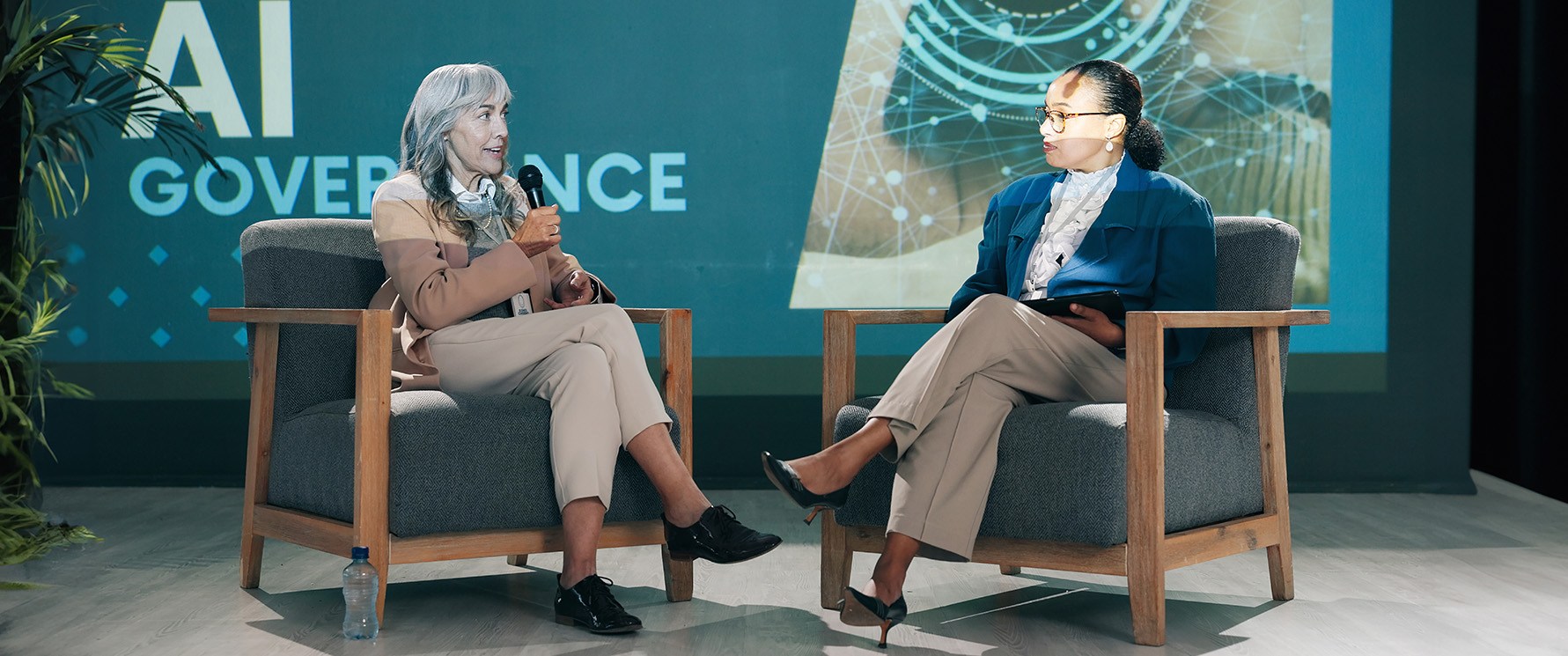
Artificial intelligence is no longer a “nice‑to‑have” experiment in HR; it is rapidly becoming the core architecture of how global organisations attract, develop and retain talent. In 2026, CHROs are expected to lead AI‑driven transformation, not simply adopt point‑product tools. For forward‑looking HR leaders, the question is no longer whether to adopt AI, but how to embed it strategically so that people operations generate measurable business value.
This article explores how AI is reshaping the HR market, why this creates a strategic opportunity for HR leaders and how specialised consulting partners such as Geconex can help CHROs turn AI hype into a disciplined, ROI‑driven people strategy.
Why AI is becoming central to HR in 2026
By 2026, AI is projected to automate or manage roughly half of all HR activities, from candidate screening to performance feedback and workforce planning. Gartner research indicates that every single CHRO priority for 2026 now depends on the successful integration of AI into the HR operating model, not just into isolated HRIS modules.
At the same time, boards are demanding clearer, more predictive “people intelligence” on talent risk, skill gaps, and succession readiness – demand that AI can only meet if data, governance and analytics are tightly aligned. For CHROs, this means AI is no longer a technology project; it is a strategic capability that must be governed, measured and woven into core HR processes.

Key AI-driven shifts CHROs cannot ignore
Several high‑authority reports highlight recurring themes that define the new HR landscape in 2026:
- Intelligent talent acquisition: AI is shortening time‑to‑hire by up to 60% and improving candidate matching accuracy through predictive analytics, while conversational AI and chatbots handle pre‑screening and scheduling at scale.
- Skills‑based, liquid workforces: Traditional job descriptions are giving way to “skill‑gap modelling” and dynamic role profiles, enabling internal mobility and continuous reskilling instead of heavy reliance on external hiring.
- Predictive people analytics: AI‑driven insights allow HR to forecast retention risk, performance patterns and succession readiness with the same discipline historically applied to financial forecasting.
- AI‑enabled manager enablement: Algorithms assist managers with feedback, coaching nudges, and workload balancing, helping them lead more effectively in hybrid and uncertain environments.
For CHROs, these shifts require a redesign of HR operating models, not just new dashboards or bolt‑on tools.
The strategic challenge for CHROs
AI is fundamentally a people and leadership issue, not a pure technology one. CHROs are expected to:
- Accelerate workforce reskilling and close AI‑related capability gaps.
- Redesign jobs and workflows so humans and machines collaborate productively.
- Lead cultural change and trust‑building around AI‑driven decisions.
Yet many organisations still struggle to quantify the value of AI investments in HR, which means tolerance for “experimental” AI pilots will tighten in 2026. CHROs must therefore treat AI as a performance lever, not a siloed HR initiative, and be able to demonstrate clear links between AI adoption and improvements in productivity, retention, time‑to‑hire and the overall employee experience.
Where independent HRIT consulting adds value
In this context, CHROs benefit from partnering with independent, vendor‑agnostic HRIT consultants who can help them:
- Define an AI‑aligned HR strategy that connects to business outcomes and risk appetite, rather than chasing the latest AI “shiny objects”.
- Assess and prioritise use cases in recruitment, workforce planning, performance management, and L&D, based on measurable ROI and ethical guardrails.
- Design change‑management and governance frameworks that ensure AI‑enabled processes are fair, transparent, and perceived as trustworthy by employees and managers.
Organisations that get AI right in 2026 are not necessarily those with the most advanced tools, but those with the strongest people‑centric AI governance and execution capability.
Geconex: partnering with CHROs on AI‑driven HR
Geconex supports CHROs in navigating the emerging AI‑driven HR market by combining HRIT‑consulting expertise with rigorous, business‑outcome‑oriented analysis.
The firm helps HR leaders:
- Translate AI opportunities into concrete HRIT roadmaps tailored to organisation size, sector and existing HR infrastructure.
- Benchmark AI‑enabled HR practices against global trends and emerging best practices, ensuring that investments are both innovative and defensible.
- Embed AI‑governance, risk management and ethical frameworks into HR processes, so that AI adoption enhances employee trust rather than undermining it.
By working with an independent, non‑competing HRIT consultant such as Geconex, CHROs can position HR as a strategic architect of the organisation’s AI‑driven future, rather than a reactive buyer of technology.
Next steps for CHROs in 2026
For CHROs looking to capitalise on the emerging role of AI in the HR market, the following actions are increasingly critical:
- Clarify how AI will support strategic HR priorities such as talent agility, leadership development and cultural resilience.
- Build a cross‑functional AI task force that includes HR, IT, data governance and legal/ethics stakeholders.
- Partner with experienced HRIT consultants who understand both the technical and human dimensions of AI‑enabled people operations.
Organisations that act now are well‑placed to use AI as a strategic advantage in 2026 and beyond, while others risk being left behind in an increasingly competitive and data‑driven HR landscape.

